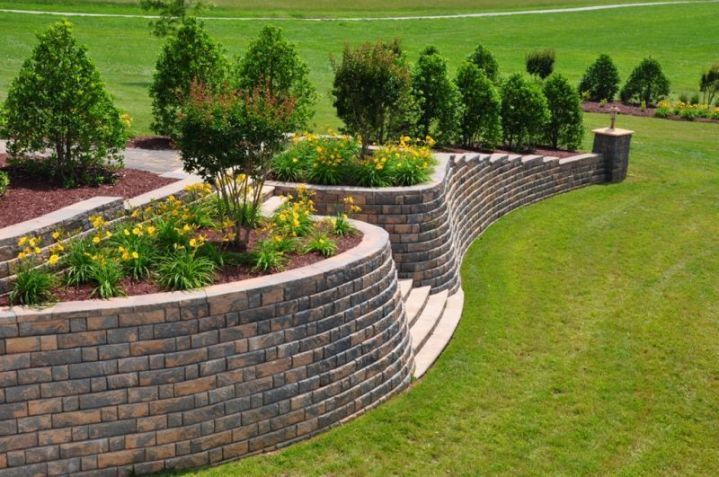
Are you also wondering exactly how to build a retaining wall on a slope? Well, building a retaining wall on a slope is one of the important landscaping methods that controls hills, stops soil washout, and supports sloping ground. It does not matter if you are the one looking to get flat garden areas or you are the one trying to make your property safe and beautiful. The idea of the retaining wall construction will give you the power to decide and carry out a lasting and effective project. This guide will take you through the whole process, from getting ready and gathering tools to landscaping, so your retaining wall will be able to preserve its strength for many years.
What Is Wall Retaining? Essential Tools And Materials Checklist
A retaining wall is a type of wall constructed to retain the soil on unusual slopes. They are generally used in landscaping for the management of the level of soil in different portions, the prevention of the slippage of the soil, the stabilization of the slopes, etc. A retaining wall, if properly constructed, will help to prevent washing away and will improve the drainage system.
Checklist for Tools & Materials:
- Shovel – Used to dig and shape the foundation.
- Tamper – Packs the base material for stability.
- Level – Checks to see that the blocks or stones are even.
- Measuring tape – Used to measure the site accurately and help mark it.
- Base material – Crushed rock or sand to give a good base.
- Retaining wall blocks or stones – The actual blocks or stones that make up the wall.
- Drainage material – Perforated pipe and gravel to hold back water.
Slope to Success: The Ultimate Guide to Building Retaining Walls Step by Step
A well-built retaining wall is a crucial part of controlling the slope of the landscape to avoid soil erosion, increase functionality, and appeal to the designs of the outdoors – hence, it is a worthy investment in any property.
Let’s learn the process of retaining a wall:
Step 1: Preparation and planning of the site.
The first one is to look at the slope and determine the location where the wall will be. Get a local building permit check – more walls require higher buildings. Draw a line of the proposed wall with stakes and a string, giving the line the desired appearance and in accordance with the plan.
Step 2: Excavate the trench
Wrench an opening to the wall’s bottom. It must be deep enough to be able to partially fold over the first row of blocks and broad enough to support the base material. On long walls on steep banks, excavate tiered level trenches.
Step 3: Install and compact the base
Into the trench pour the crushed rock, and the trench is tamped. A flat, concrete foundation will not allow movement and will be stable in the long run.
Step 4: Lay the first course of blocks
The first layer of the blocks is to be placed on the rigid base. Begin at the bottom of the wall. Measure the front-to-back and side-to-side levelness of every block using a level. Add additional base material where necessary.
Step 5: Install drainage and backfill
To minimize hydrostatic pressure, I would install a perforated drainage pipe behind the first course and then wrap it with filter cloth. The hole behind the wall should be filled with free drainage of 812 inches of clean gravel that has been crushed.
Step 6: Laying additional courses
Add the additional blocks with staggered vertical joints to create more strength. Keep on filling the back of the wall with crushed gravel and tamping it in layers to increase the strength.
Step 7: Finish with capstones and landscaping
After the wall is built to the required height, cement the capstones so as to have a smooth appearance. Complete the project at the back of the wall with topsoil and landscape the space to ensure the soil is held in place and stops eroding.
Conclusion
A retaining wall on a slope may appear to be difficult to construct, but with smart arrangement, the right materials, and a professional approach, it is possible to have a successful project that will transform your landscape. When properly built, a retaining wall stops the washing away of soil, makes the sloped area more usable, and also increases your property’s value and beauty with lasting effects. This guide is your answer to “how to build a retaining wall on a slope?” If you stick to the guided steps and make drainage and stability your priority, you will be able to build a long-lasting and good-looking retaining wall that will perform its function for a long time.
FAQs
Do I need a permit to build a retaining wall?
In most places, a permit is needed for walls that exceed a certain height—consult your local authorities for more information.
How deep should the trench be for a retaining wall?
The trench should be deep enough to put in the first course and provide a stable base.
How do I stop my retaining wall from leaning?
Make use of a solid base, adequate drainage, and staggered blocks to ensure stability.